Conduction vs Convection Heating : What Actually Differs
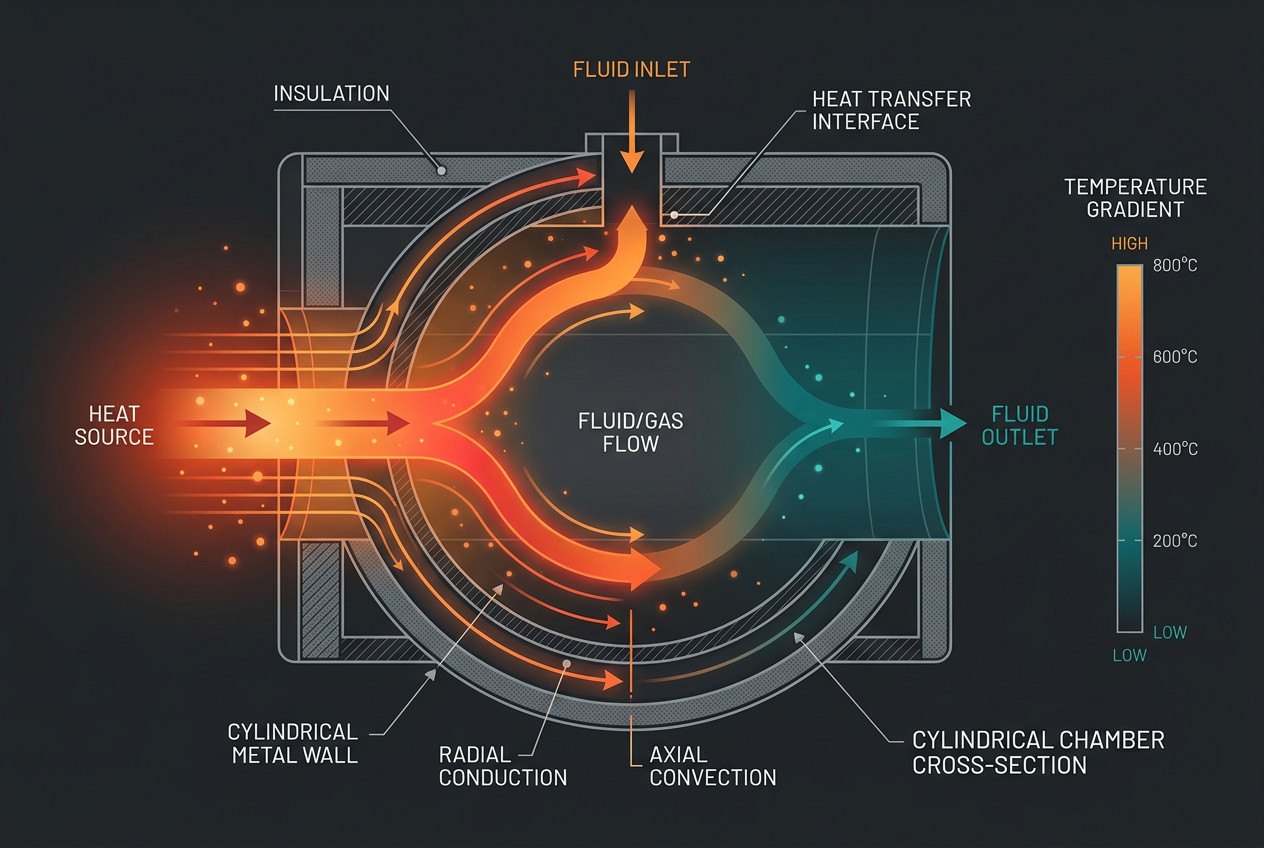
Heating method is the specification most often quoted in vaporizer marketing and least often explained. The distinction is real and has practical consequences, but it predicts performance less reliably than the quality of the implementation.
Conduction
In a conduction design, material sits in direct contact with a heated surface — typically a metal or ceramic chamber wall. Heat transfers by contact, which is efficient and fast: most conduction devices are ready in well under a minute.
The limitation is evenness. Material touching the wall heats first and hardest, while material at the centre lags. This produces the uneven result familiar to anyone who has emptied a chamber to find it toasted at the edges and barely touched in the middle. Stirring between sessions is the standard remedy, and a finer, more consistent grind narrows the gap considerably.
Convection
A convection design passes heated air through the material instead. Nothing touches a hot surface; the air is the carrier. Because every particle meets air at roughly the same temperature, extraction is markedly more even and the material is not cooking whenever the device is idle.
The costs are heat-up time, power draw and price. Raising a volume of air to temperature takes longer than heating a metal wall, and sustaining airflow at temperature is demanding on a battery. Convection units are consistently more expensive, and desktop convection units frequently require mains power for that reason.
| Conduction | Convection | |
|---|---|---|
| Heat-up | 10–40 seconds | 30–90 seconds |
| Evenness | Uneven, benefits from stirring | Even throughout |
| Battery draw | Lower | Higher |
| Typical cost | Lower | Higher |
| Idle behaviour | Material continues to cook | No contact heating at idle |
Hybrid designs
Most current portable devices are hybrids in practice, using a heated chamber with deliberate airflow paths so that both mechanisms contribute. Manufacturers vary in how honestly they describe this — a chamber that is heated on one side while air passes through is a hybrid regardless of which single word appears on the packaging.
Practical guidance: a well-built conduction device outperforms a poorly built convection one at any price. Chamber material, temperature control accuracy and airflow design predict real performance far better than the heating category alone.
Maintenance differences
Conduction chambers require more frequent cleaning, because material in direct contact with a hot wall leaves residue on that wall. Convection units accumulate residue further along the vapour path instead, where it is often harder to reach but slower to build. Neither is meaningfully lower-maintenance overall; the work simply moves to a different part of the device.

Marcus Reyne
Marcus Reyne spent nine years as a bench technician servicing laboratory borosilicate before turning to consumer glassware and vaporizer hardware. He writes about cleaning chemistry, thermal stress and hardware longevity.