Dry Herb Vaporizer Maintenance : A Practical Schedule
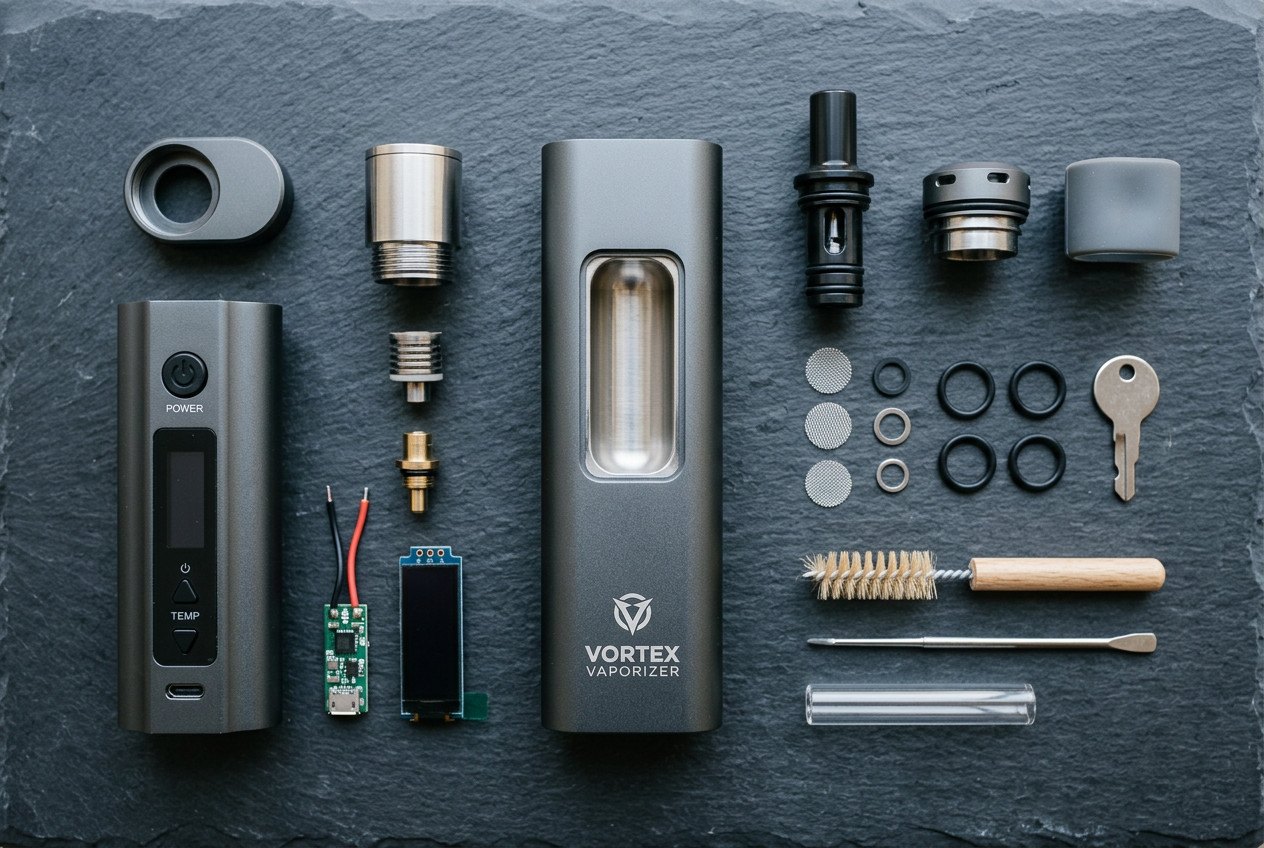
A dry herb vaporizer is a small thermal system with tight tolerances. When performance falls off, the cause is almost always restricted airflow or a poor electrical contact — both of which are maintenance issues rather than faults. Working through them in order will resolve the large majority of complaints.
After every session : the thirty-second pass
Empty the chamber while it is still warm but not hot. Residue that has cooled and hardened requires solvent; residue removed warm comes away with a brush. Most devices ship with a small bristle brush for exactly this reason, and using it costs less time than any later intervention.
Weekly : screens and mouthpiece
The screen is the single most common failure point. As it clogs, airflow drops, which forces harder draws, which pulls more particulate into the vapour path — the problem accelerates once it starts. Soak screens in isopropyl for fifteen minutes, then clear the mesh from the reverse side of the normal airflow direction, so debris exits the way it came in.
Mouthpieces vary. Glass and steel components tolerate an isopropyl soak without issue. Plastic mouthpieces frequently do not — many are ABS or polycarbonate, and prolonged alcohol contact causes crazing, a network of fine cracks that weakens the part and traps residue. Warm soapy water is the correct treatment there.
Check first: if a device has lost power or is charging intermittently, clean the charging contacts with a dry cotton swab before assuming a battery fault. Residue films are mildly conductive and interfere with charge negotiation.
Monthly : the vapour path
The vapour path is everything between chamber and mouthpiece. On devices where it can be removed, it should be soaked. On devices where it cannot, an isopropyl-dampened pipe cleaner drawn through will lift most of what has accumulated. Never flood a unit that contains electronics — dampened, not wet, is the standard.
Battery care
- Store between 40% and 80% charge if the device will be unused for more than a fortnight.
- Avoid running to complete depletion; lithium cells age faster from deep discharge than from partial cycles.
- Keep the unit out of vehicles in summer — heat degrades cell capacity permanently and faster than cycling does.
- Charge with the supplied cable and adapter where possible; mismatched fast chargers can push a cell harder than its controller expects.
When cleaning will not fix it
A few symptoms genuinely indicate hardware failure rather than maintenance debt: a chamber that no longer reaches temperature after a full clean, a device that reports wildly inconsistent temperatures, or visible corrosion on the battery terminals. In those cases the useful step is warranty contact, not further disassembly — opening a sealed unit generally voids what protection remains.

Marcus Reyne
Marcus Reyne spent nine years as a bench technician servicing laboratory borosilicate before turning to consumer glassware and vaporizer hardware. He writes about cleaning chemistry, thermal stress and hardware longevity.