How to Clean Borosilicate Glass Without Damaging It
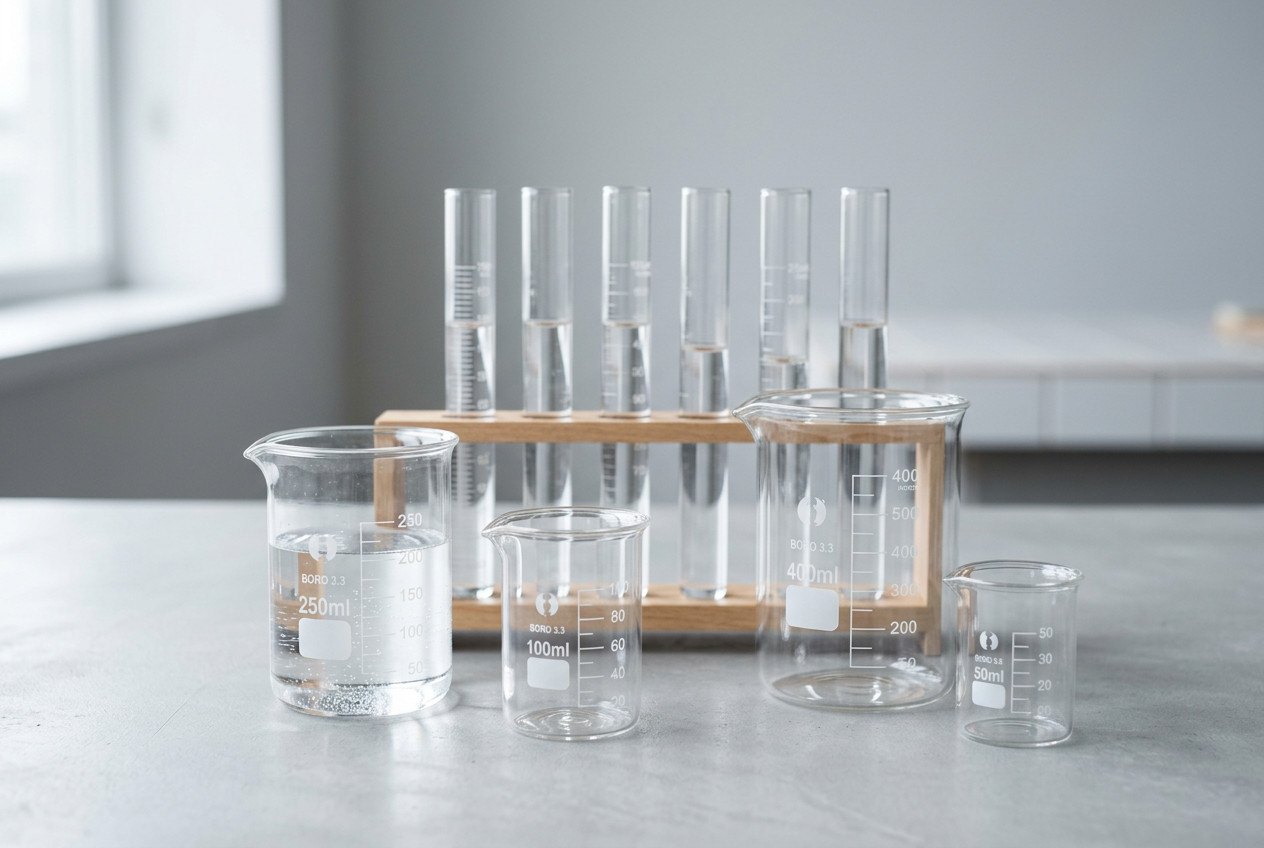
Cleaning borosilicate is mostly a solvent problem, not a scrubbing problem. Resinous residue is largely non-polar, which is why water — even boiling water — moves it around without dissolving it. The job is to pick a solvent that the residue actually surrenders to, then give it enough contact time.
Why isopropyl alcohol remains the default
Isopropyl alcohol at 91% or higher dissolves resin efficiently and evaporates cleanly, leaving no film. The 70% variety contains far more water, which both dilutes the solvent action and lingers in joints. If a bottle of 70% is all that is available, the cleaning will take roughly twice as long and leave more behind.
Coarse salt is the second half of the pairing. It does no chemical work at all; it is purely an abrasive that the alcohol carries into corners the fingers cannot reach. Rock salt or kosher salt is right — table salt is too fine to scour, and its anti-caking agents cloud the solution.
Ratio that works: roughly one part coarse salt to four parts 91% isopropyl, enough to half-fill the piece. Cap the openings, agitate for 60–90 seconds, then let it stand for 20 minutes before a second agitation.
The thermal shock rule
Borosilicate tolerates temperature change far better than soda-lime glass, but tolerance is not immunity. Its published thermal shock resistance sits near a 160°C differential under ideal conditions — and consumer glassware is rarely ideal. Joints, welds and thick base sections all concentrate stress, and a piece that has been dropped once may carry a micro-fracture that is invisible until it is heated.
The practical rule is simple: never introduce a temperature change faster than you could comfortably follow with your hand. Do not run hot water over cold glass. Do not put a warm piece into a cold sink. If a piece has just been used, let it reach room temperature before any cleaning begins — this single habit prevents most breakages we have seen.
What to avoid
- Acetone — dissolves residue well but attacks most silicone gaskets and any plastic clip or keck fitting it contacts.
- Bleach — ineffective against resin, and produces hazardous byproducts if any ammonia-based cleaner is present.
- Dishwashers — the combination of high-pressure heated water and unsupported glass is responsible for a large share of cracked pieces.
- Metal picks — steel scores the inner surface, and every score becomes a site where residue anchors faster next time.
Rinsing and drying
Rinse with warm — not hot — water until no alcohol smell remains. Any residual isopropyl will be tasted on the next use. Drying matters more than most people expect: water trapped in a joint encourages mineral deposits that etch the surface over months. Shake out the bulk, then stand the piece on a cloth with the openings downward and let air do the rest. Compressed air, if available, clears joints in seconds.
Cleaning frequency
A light rinse after each use costs about thirty seconds and removes the fraction of residue that has not yet oxidised and hardened. Deep cleans then become a monthly task rather than an hour-long recovery job. Hardware that is cleaned lightly and often lasts substantially longer than hardware that is cleaned thoroughly and rarely — the deep clean is where thermal and mechanical stress get introduced.

Marcus Reyne
Marcus Reyne spent nine years as a bench technician servicing laboratory borosilicate before turning to consumer glassware and vaporizer hardware. He writes about cleaning chemistry, thermal stress and hardware longevity.